Theatre and Democracy: Pt 1

I go to the theatre perhaps 5-7 times a year, less than I did at one point in my life, but more than most. Sometimes, I'll catch a show at the Krannert Center in Champaign, but more often than not I'll trek up to Chicago. A recent trip, right around election season, had me thinking a lot about theatre in the United States, and its connection to American democracy. So I began to write about it, the results of which I'll be posting here. Over the next few weeks, I am going to examine the relationship between theatre and American democracy, examining how the declining health of one reflects the declining health of the other.
The health of a country’s democracy is tied to the health of its civil society. This is especially true when it comes to the arts. When artists have the means and freedom to express themselves, the arts flourish. Likewise, the arts are crippled when a nation becomes more insular, and during periods of creeping economic pressure. The United States, passing as it is through a time of cultural and economic challenges, is likewise facing headwinds in the artistic sector.
Act I: Ancient History
In ancient Athens, theatre and democracy were intimately connected. According to legend, transmitted to us through Aristotle, Greek theatre grew out of choral hymns sung to the god Dionysis. As time went on, writers began to add individual speakers to these choral performances, and the range of material grew: myths, legends, and contemporary social and political matters. These hymns, once collective expressions of praise, had evolved into narrative depictions of the stories that defined Athenian culture.
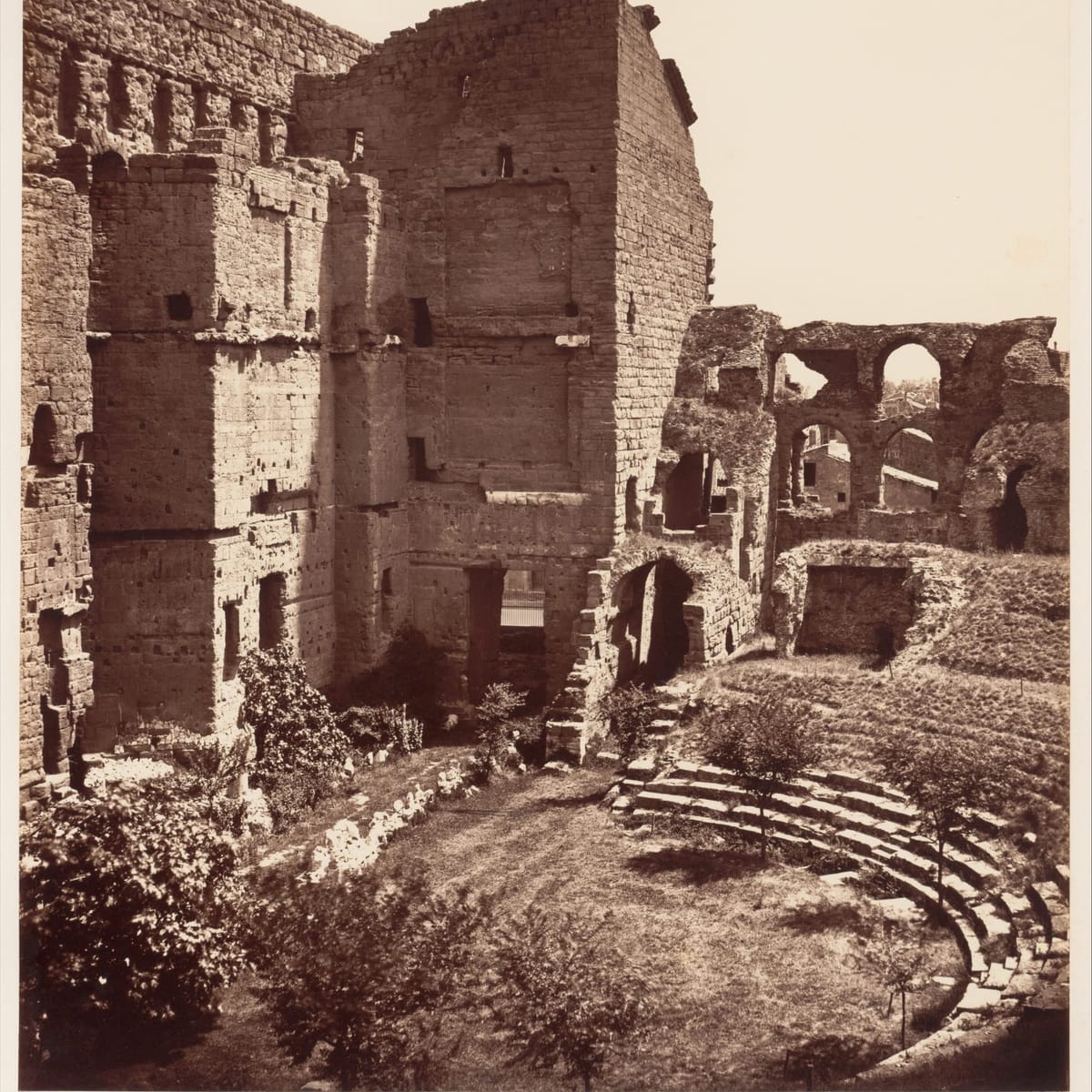
Theatre truly came into itself with innovation by the playwright Aeschylus: he added a second actor. With that, the stage became a place of dialogue, both literally and figuratively. These plays were performed at a festival called the City Dionysia, where playwrights competed to win a prize awarded by a set of judges drawn by lot. The City Dionysia was a major civic festival, held in the theatron at the foot of the Acropolis. Attendance was conceived of as a civic duty. Though Athens was a patriarchical, slave-owning society, women and slaves could attend the City Dionysia, and tickets were subsidized for poor citizens.
The theatre of this era asked questions of rulership and virtue, and obliquely satirized the rich and powerful. It represented a society studying its own reflection and engaging in debate with itself. It was the product of an oral culture that placed a heavy emphasis on rhetoric and debate. It was also short-lived: the golden age of Ancient Greek theatre coincided with the fragile flowering of Athenian democracy, from roughly 480 to 404 BCE, when more oligarchic forces began to assert control over the Athenian government.
Like the Athenians, the expansion of our democracy in the United States over the last six decades has coincided with a flowering of theatre, and, like the Athenians, the waning of one beneath the looming shadow of a hungry oligarchy seems to presage the waning of the other. The American stage and American liberal democracy are both under enormous pressure. Enter stage left: a nation in crisis.
Act II: Recent History
American professional theatre as it exists today was born out of the regional theatre movement. Artists like Zelda Fichandler, one of the founders of Washington DC’s Arena Stage, and Sir Tyrone Guthrie, one of the founders of the Guthrie Theatre in Minneapolis, envisioned an American theatre practice that was not centered on the commercial theatre of Broadway. They sought to bring new and classic works to audiences across the country without the Broadway producer’s need to turn a profit.
The founders of the movement recognized that there was a hunger for performance among both artists and audience members. In response to the growth of regional theatres, members of the burgeoning, post-war American middle class availed themselves to live performance the millions. It was a great flourishing of ambition and artistry, laying the foundation for the theatrical ecosystem that prevails in America to this day.
The regional theatre movement not only democratized theatre attendance–it democratized theatre creation. Companies like Vermont’s Bread and Puppet Theatre and El Teatro Campesino, created as the cultural arm of United Farm Workers, were both founded during this era. The movement fostered the mentality that theatre could happen anywhere; that artists could gather together and create work that reflected the experiences of their communities without commercial concerns. Regional theatres provided a space for a dynamic society to study its own reflection and engage in dialogue with itself. In this way it resembled the theatre of Ancient Greece. A thousand City Dionysia, happening all across the country.
The establishment of regional theatre was the largest flowering of theatre since the WPA’s Federal Theatre Project, but unlike the FTP, regional theatres were designed to persist as ongoing concerns. And so, they were structured as charitable entities. This is still true of most theatre companies in the United States, giving the field its more common contemporary designation: nonprofit theatre. While part of a nonprofit theatre’s revenue is earned from the sales of tickets and subscriptions, the majority of operating and capital expenses are often covered by grant funding and tax-deductible donations from individuals and corporations. While American nonprofit theatre largely operates for public benefit, it is, like many other public goods in the United States, supported by private largesse.
The founding of regional theatres coincided with the establishment of Masters of Fine Arts (MFA) programs such as those offered at the Yale School of Drama, which was organized as its own school in 1955. Viewed in this light, the MFA and nonprofit theatre grew in tandem–an industry was established, and a system of education for that industry grew up alongside it, training highly-skilled professionals to fill specialized roles. Some theatre programs, such as the Brown’s MFA program, or the MFA program at the University of Missouri Kansas City, have long-standing partnerships with large nonprofit professional theatres, promising conservatory training while also providing these theatres with the grist of fresh young talent to be had for cheap. Yet even for these stalwarts, there are dark clouds on the horizon: Brown, which partners with Trinity Rep in Providence, has paused admissions, and the partnership between UMKC’s program the Kansas City Repertory Theatre ends in 2029.